The 3 Step Expansion Plan
Based on the information we've found through various space agencies, we've created a plan that allows for strategic human exploration of potential habitable exoplanets. This plan involves many future technologies that we believe are within reason and potentially achievable
Step 1: Find the most suitable planet
The first step in the search for a habitable exoplanet is detecting and analyzing various pieces of data.
Through analysis of Earth, scientists have decided on key elements, such as water vapour, oxygen, and carbon dioxide, all of which are necessary for life as we understand it. Using advanced spectroscopy, astronomers can analyze light passing through the atmospheres of distant planets to identify these gases.
Water vapour would indicate the presence of liquid water, a fundamental requirement for all known forms of life. Oxygen could suggest the existence of biological processes, such as photosynthesis, while carbon-based compounds like methane may point to microbial life or geological processes that could eventually support life.
Step 2: Start our terraforming process

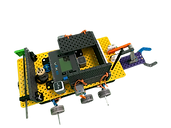
Once the most promising planets are identified, step two involves deploying our Astrion Space Rover (A.S.R). Unlike traditional rovers designed for exploration, A.S.R.’s mission is solely focused on terraforming. Its purpose is to prepare selected planets for human habitation, enabling the eventual spread of human civilization across the universe. This rover was based on current planet exploration rovers. It includes many common features such as an arm with a camera, a suspension drivetrain, and a materials analysis storage compartment.
Unique to our rover, our fuel is the best option known to mankind at the moment, antimatter, a resource that is abundant in the universe but something we are struggling to create. When colliding with matter, antimatter creates large amounts of energy. It is estimated that 1 gram of antimatter can generate similar amounts of energy to a nuclear bomb. This is because there is potential that there is very little light at the exoplanet, rendering solar panels useless. Even though it isn’t our main energy source, we’ve still included foldable solar panels just in case. Another unique component of our rover is the seed dispenser. Since the exoplanets chosen are likely to have soil, we can dispense the seeds to see how they grow on the exoplanet. Not only does this give information on the terrain, but also allows for the creation of critical gases such as oxygen.
Before:

After:

Step 3: Report back to Earth
Once the terraforming is successful, the robot will begin sending signals with data back to Earth at least once a month. Although the first signal will take tens or hundreds of years, we can start making our way there once the first signal is received. The A.S.R. will continue to send signals as we travel so we can stay informed of the state of the planet and have time to return to Earth if there has been a problem before we arrive.
Summary
In conclusion, the journey to establish human civilization on a habitable exoplanet will be beneficial with the help of the A.S.R. It begins with finding the most suitable planet by analyzing its atmosphere for signs of life-sustaining elements like water and oxygen. Once identified, the next step is to deploy the A.S.R. to begin terraforming the planet, utilizing advanced technology such as antimatter fuel and seed dispensers to prepare the environment. Finally, with successful terraforming, humans can begin their long journey to start civilizations across the universe.